
Deepening the field: exploring agriculture through art & science
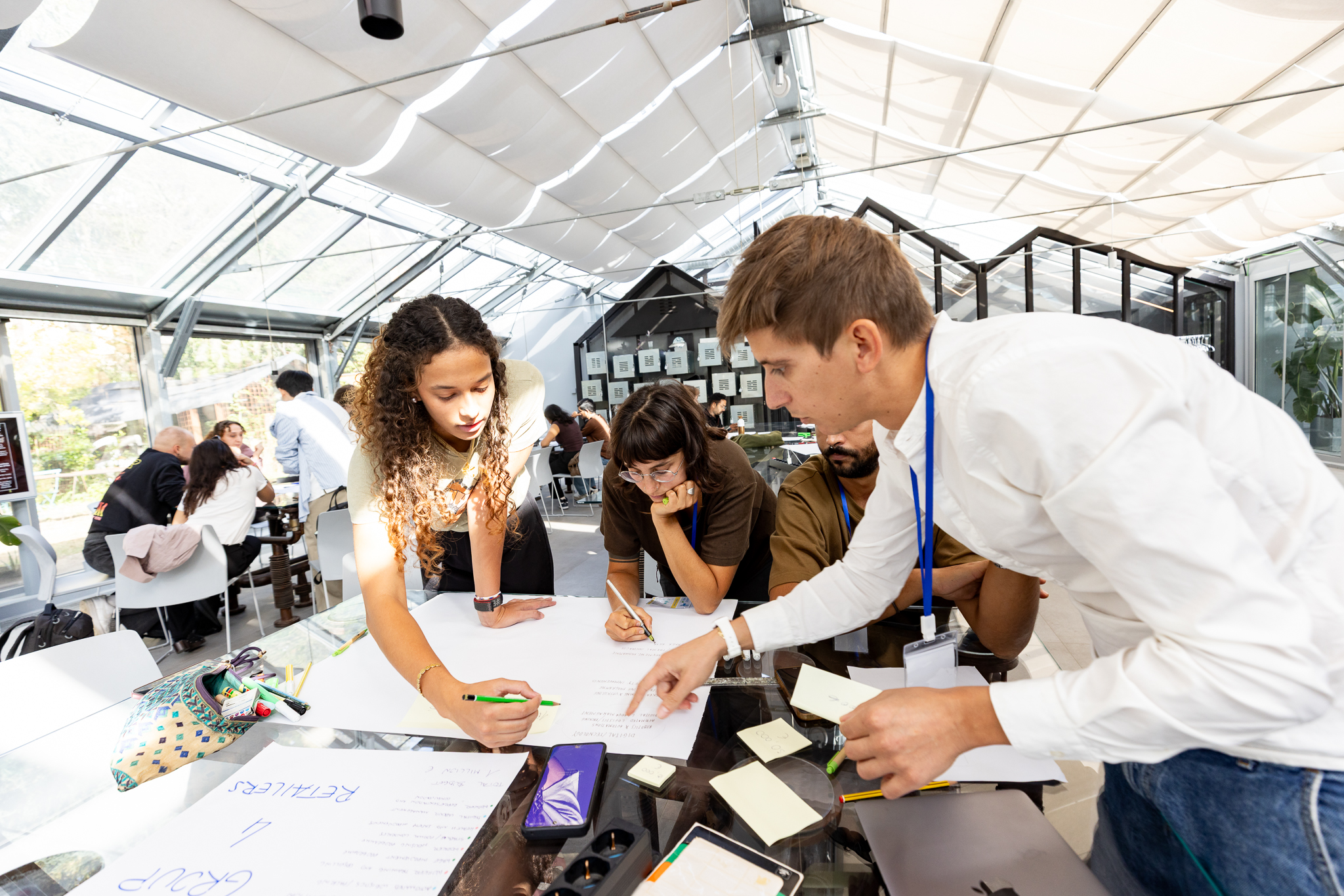
As part of the second edition of the Festival of Ecological Imagination 2026: Sensing the Climate, three FIT4CEA dissemination events took place in Bologna.
On October 9, serra madre hosted two workshops organized in collaboration with the University of Bologna, open to university students across disciplines. Hidden Landscapes, an interdisciplinary discussion bringing together agronomy, sociology, and human rights; and Fields of Evidence: Technology for Human Rights in Food Systems, exploring agriculture as both a source of conflict and a tool for resilience.
The day closed with EDONICA, a speculative performance centered around food, open to the wider public. An invitation to sit at the table not to consume the world, but to feel it. Through a synesthetic orchestration of food, light, scents, and everyday convivial gestures, we explored the complexity of contemporary agriculture, proposing pleasure as a paradigm for human-environment relationships. We brought to surface tensions concerning the controlled environment agriculture by introducing pleasure as a paradigm to reach a more sustainable food system.
Fields of Evidence: using open-source data to document impacts on food systems
Drawing on case studies from Gaza, the workshop explored how agriculture can be both an object of conflict and a tool for resilience, and how satellite imagery, environmental data and open-source evidence can document damage to food systems. Three short lectures set the context: Elisabetta Tola (Formicablu) on investigative journalism applied to agriculture; Francesco Orsini and Giuseppina Pennisi on damage to crops and food production facilities; and Lorenzo Pezzani (University of Bologna) on open-source investigation methods, including the work of Forensic Architecture. Over 30 students then worked in seven groups on five case studies , from olive groves and vineyards to greenhouses and a strawberry farm, using evidence packs with satellite images from before and after October 2023, GVI data, FAO fact sheets and press sources. Each group produced a poster, for a total of seven.
Exploring the hidden workforce behind Controlled Environment Agriculture
FIT4CEA also contributed to “Hidden Landscapes: Agriculture, Technology and Human Rights”, a workshop held as part of Sensing the Climate –Festival of Ecological Imagination in Bologna. The morning session explored the often-overlooked social dimension of Controlled Environment Agriculture, focusing on the relationships between technological innovation, migration, labour organisation and working conditions. Elisabetta Tola, Francesco Orsini and Giuseppina Pennisi introduced the scientific and societal context through a series of presentations, highlighting the “greenhouse labour paradox” and challenging common assumptions about automation and migrant labour. Beatrice Vivani coordinated the subsequent interactive workshop, in which around 40 students from the University of Bologna and Johns Hopkins University worked in groups to represent different stakeholders, prioritise limited resources and negotiate strategies for a productive, profitable and socially sustainable commercial greenhouse.
